Brighton Hill - A Culture Built on Mutual Respect.
Across the UK, June is recognised as Pride Month – a month dedicated to educating and celebrating the history and culture of LBGTQ+ communities around the country.
I therefore want to mark the end of this month by reflecting on the importance of respect and equality for people of all different faiths, beliefs, backgrounds and cultures.
This is fundamental to our approach to safeguarding students at Brighton Hill – we know that if we work tirelessly to maintain a culture where everyone feels accepted, then the risk of harm or intolerance is minimised and our students will feel safe and happy attending school. This includes preventing and addressing any discrimination based on any of the 9 'Protected Characteristics', which are:
- Age
- Gender reassignment
- Being married or in a civil partnership
- Being pregnant or on maternity leave
- Disability
- Race including colour, nationality, ethnic or national origin
- Religion or belief
- Sex
- Sexual orientation
Below is some information on how we build this culture, and how you can support your child at home.
What we do to educate students:
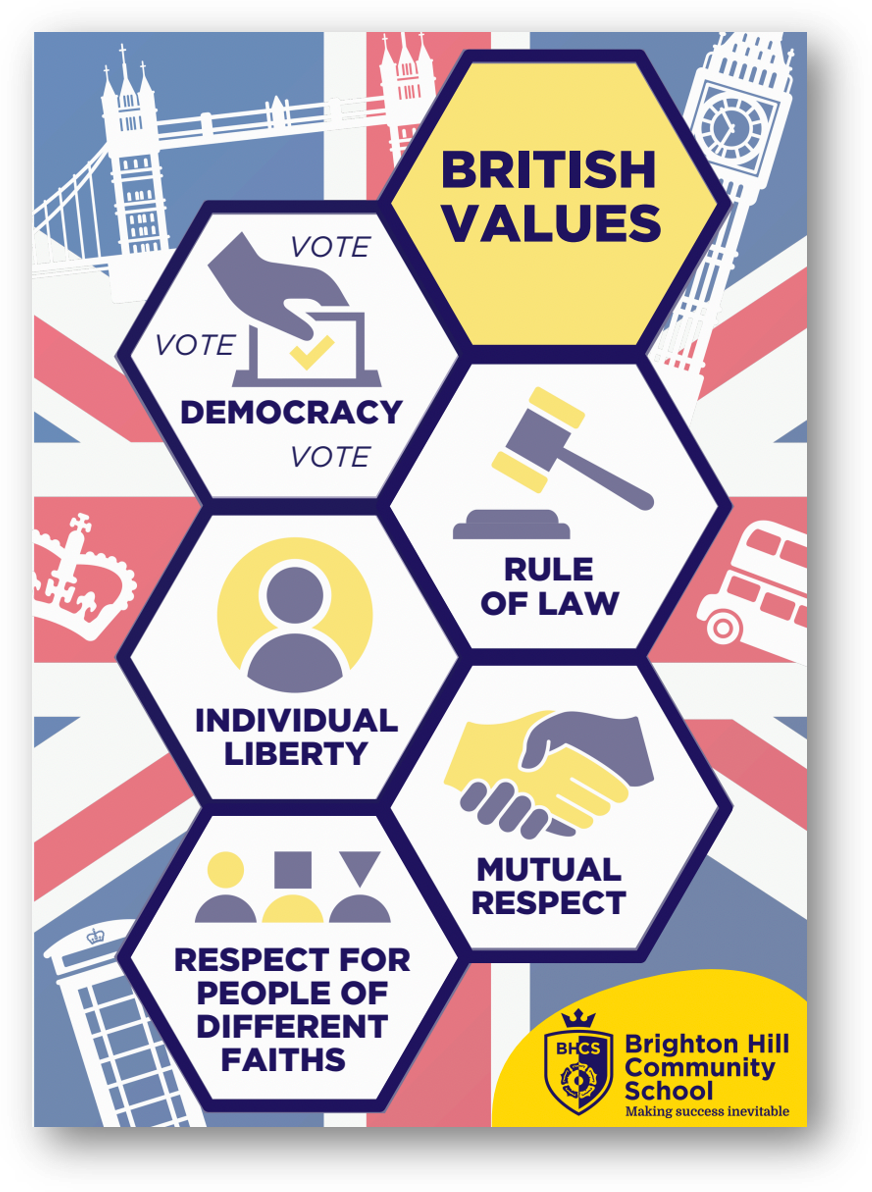
One of the key things we do is ensure that our students are aware of what is known as our “Fundamental British Values”. These are a set of important ideas that help us all live together peacefully and respectfully in the UK. They are not about where you come from or what you believe – they are about how we treat each other. At Brighton Hill, these values go hand-in-hand with our four cornerstones (Kindness, Commitment, Collaboration and Courage).
Through our My World programme, Deep Learning Days, and woven into all our lessons, we try to teach our students about the importance of respect and acceptance by reinforcing the importance of these values, shown below:
How parents/carers can support at home:
The main way you can support is to have open, healthy discussions with your child about what they are learning at school. Ask them about their My World and RS sessions and encourage them to reflect on the key themes of respect and equality.
If they do share any unhealthy or intolerant views, challenge these in a calm and appropriate way. You might want to ask them:
- Where did they first hear these views, and can they trust the source of the information? This webpage from Educate Against Hate will give further guidance on how young people can think critically about what they see online: https://www.educateagainsthate.com/fake-news-misinformation-disinformation/
- What could the impact be of the views they have shared? How might intolerance impact them, the 'victim', or society more widely, if it isn't addressed and challenged?
- How might they feel if they were in someone else's shoes? Encourage your child to reflect on how they might feel if they were discriminated against for something that was completely outside of their control
Access to tutor time resources:
All of the My World and RS sessions that your child is scheduled to have been in throughout the year are available to them on their Teams page, in the Team called 'BHCS - Tutor Programme' (shown below).
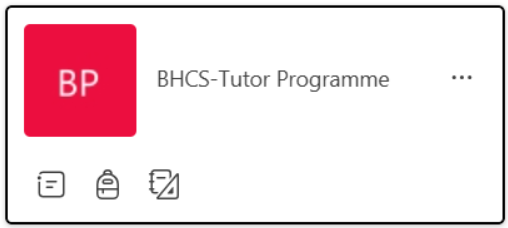
Here, they will be able to review any/all of the information covered, and it's an excellent resource to facilitate conversations at home about the important topics they have been covering.
This is equally as valuable for when your child is absent for any reason - the information covered in these sessions is statutory and therefore must be taught. We would therefore greatly encourage you to ask your child to access any sessions they have missed, and discuss with their tutor if they are worried about any of the topics covered.